

Before you hire your first HR person, define the job
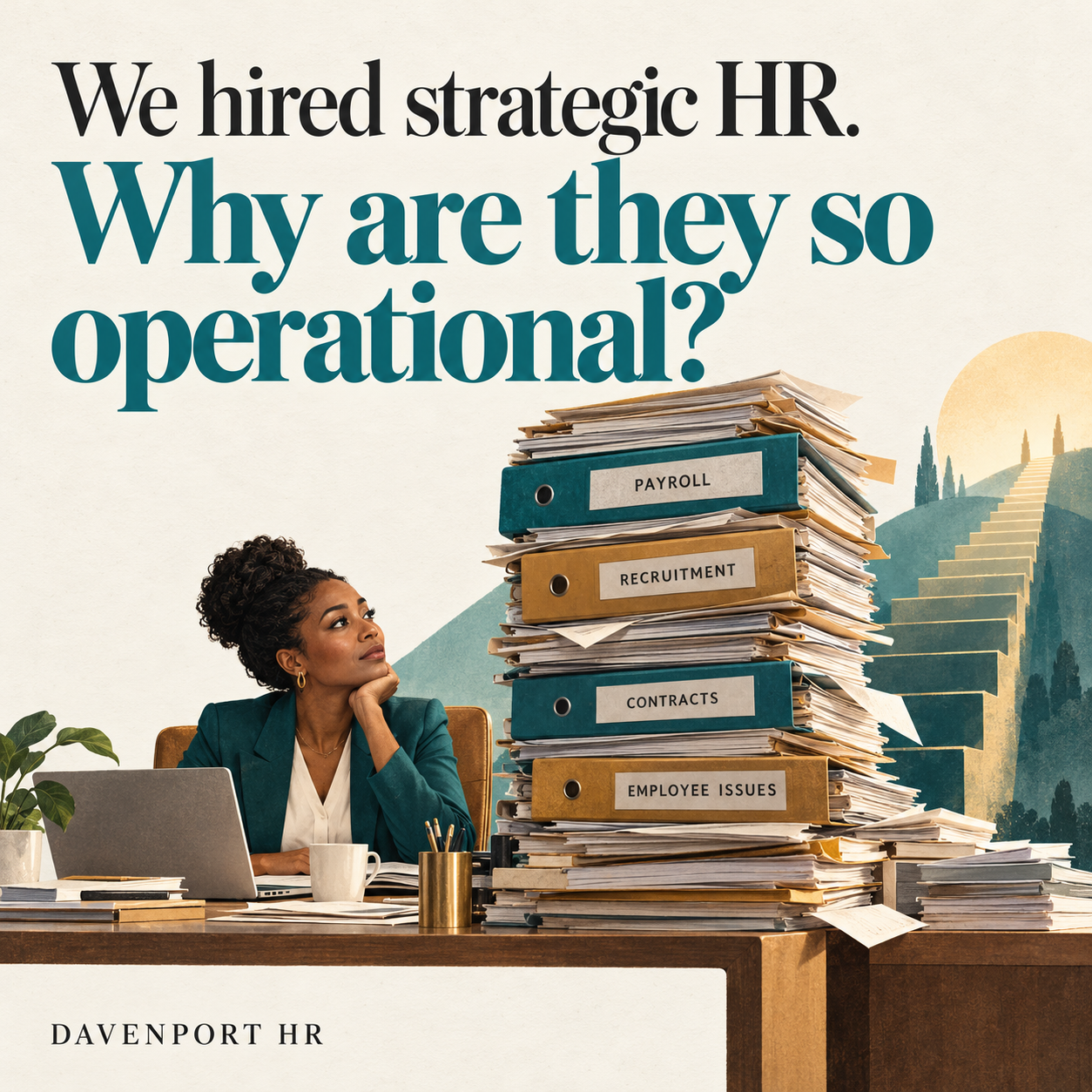
Ask a founder why they need their first HR person and the answer might be: “It’s getting messy.”
Managers are handling things differently. People questions keep landing on the founder’s desk. Nobody is quite sure who owns what, and decisions that used to take five minutes now involve three meetings.
The business needs HR support. But what kind?
That question often gets skipped. A manager or generalist is recruited with a broad brief to “sort out HR”. They inherit the payroll queries, recruitment, employee issues and overdue policies, alongside an expectation to make the business better organised.
They can be capable, committed and busy all day, while making very little progress on the changes they were hired to deliver.
What are you actually hiring someone to do?
There is a significant difference between keeping everyday HR running and building the way a growing business manages its people.
Both matter. But if the business needs both, the role needs enough time, authority and support to deliver them.
Before recruiting, look at three areas:
Role clarity. Do people understand what they are accountable for, where their responsibilities end and what good performance looks like?
Management expectations. Do managers set clear objectives, give useful feedback and address problems consistently?
Decision-making. Is it clear which decisions managers can make, where HR should advise and when the founder needs to be involved?
These do not need to be fully developed before someone joins. Building them could be a central part of the job. But that work needs to be recognised in the brief and reflected in the experience you recruit for.
If you need someone to challenge an organisational structure, advise the leadership team and develop management capability, those responsibilities should shape the hire.
Choose the support around the work
Imagine a growing business where the founder approves every pay rise, managers have different approaches to performance and several roles overlap.
The immediate need might be a focused piece of work: clarify responsibilities, agree how pay decisions are made and give managers a practical approach to setting expectations and handling performance.
A project or fractional HR lead could work with the founder to build those foundations, while helping define what ongoing support the business needs.
That might lead to a permanent HR manager with a clear remit. It might reveal that part-time operational support is enough for the next stage. Or the business might need a senior permanent hire from the outset because the scale and complexity justify it.
The answer depends on the work.
A useful test before you recruit
Could you name the three things you would expect your first HR hire to change in their first six months?
“Take people issues off my desk” is understandable, but it needs unpacking. Which issues? What should managers own? What needs building? And which decisions are you willing to delegate?
Answering those questions gives you a clearer brief, a more realistic role and a better chance of hiring someone who can succeed.
Your first HR hire can make a substantial difference to the business. Give them a job that is defined well enough to deliver it.
At Davenport HR, I help growing businesses identify what they need, put practical people foundations in place and choose the right ongoing HR support.